
"Very low power use, and the warm darkness gives the chicks a refuge just like a mother's feathers."
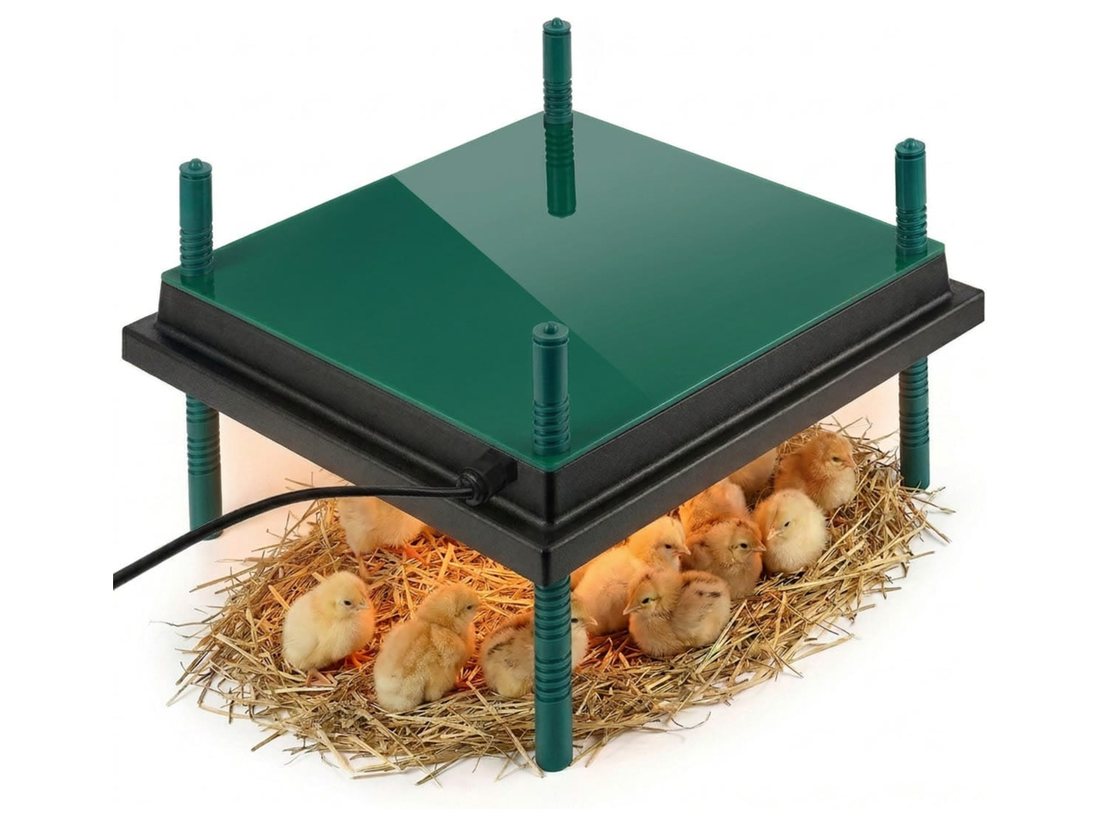
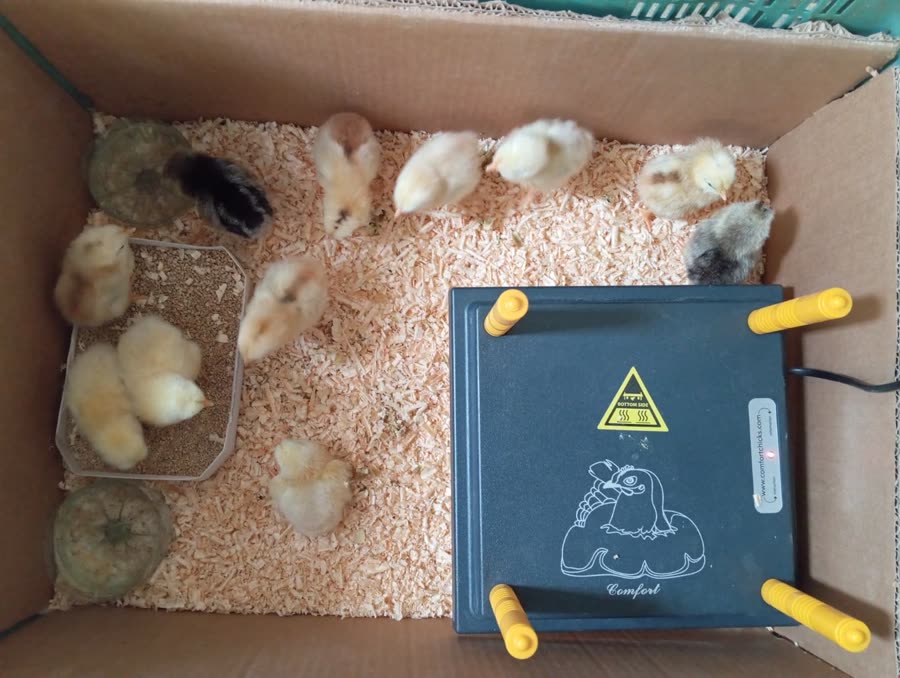
After the hatch, your chicks need a warm refuge for several weeks. Our plate gives off gentle contact warmth, in the dark, just like being under a hen's feathers.
Ships with its protective cover and the From Egg to Hen ebook.
Adjusting the legs, contact warmth, droppings-proof cover: the video shows the plate in use, exactly as you'll receive it.

30 W against 150 to 250 W for an infrared lamp: about £3 to £4 of electricity per 4-week cycle, instead of £25 to £30.

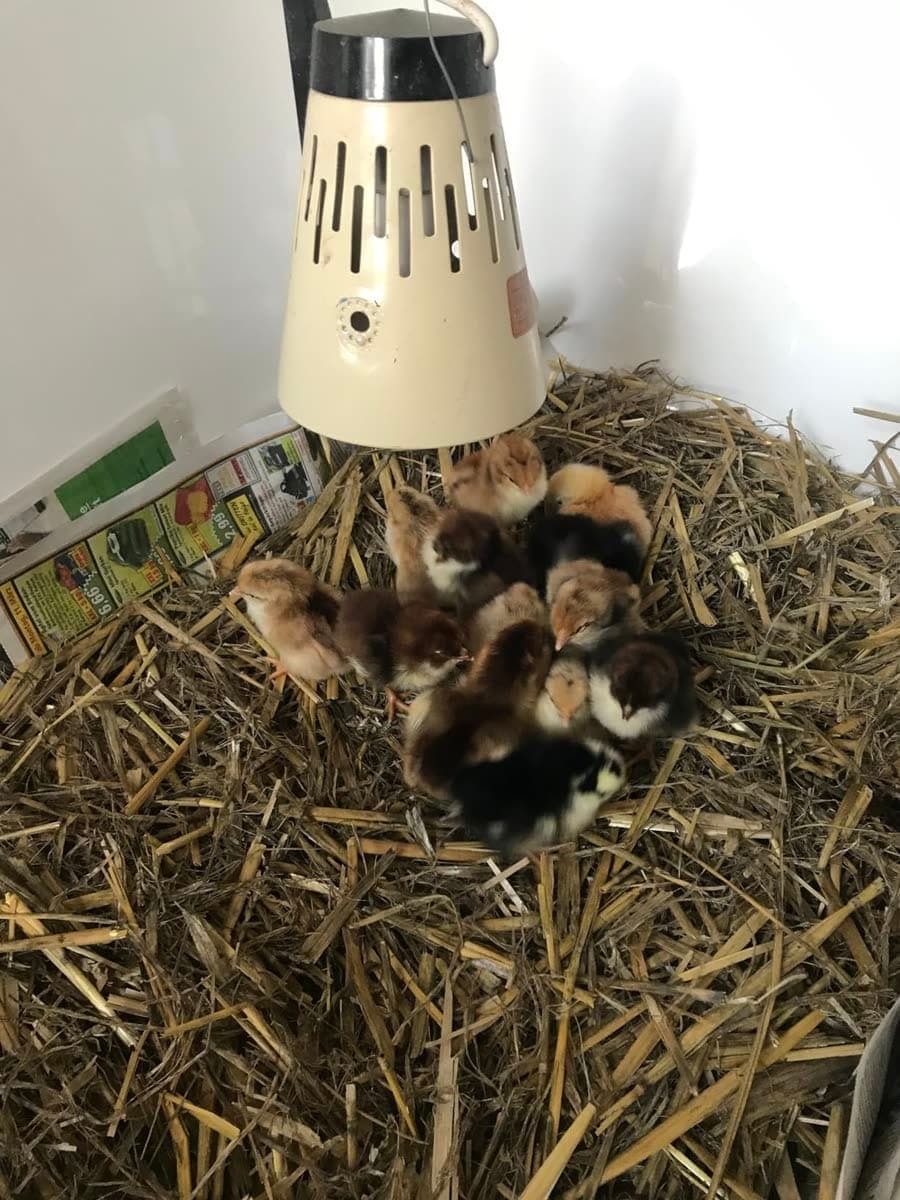
Unlike a red lamp left on around the clock, the plate heats without lighting up and respects the chicks' natural sleep cycle.

The heat spreads across the whole surface, with no spot too hot or cold edge. No scorching bulb hanging over the bedding.

The sloped cover stops the chicks perching on top and protects the plate from droppings: a wipe with a sponge and it's clean.

Its four legs adjust in height to follow the chicks' growth, from day one to weaning.

A 35 x 35 cm square to hold 25 to 30 chicks. Also suits young quail and ducklings.
| Power | 30 W |
| Capacity | 25 to 30 chicks |
| Size | Square, 35 × 35 cm |
| Type of heat | By contact, no light |
| Height | Adjustable, up to about 20 cm |
| Legs | 4 adjustable legs |
| Protection | Sloped droppings-proof cover included |
| Animals | Chicks, quail chicks, ducklings, from day one to weaning |
| Included | Plate, cover, From Egg to Hen ebook |
Worth knowing: the plate heats by contact and doesn't light up, which is normal. Chicks slip underneath to warm up, then come out to eat and explore.
The infrared lamp used to be the norm. Here's why the heat plate replaced it, point by point.
"Very low power use, and the warm darkness gives the chicks a refuge just like a mother's feathers."
"The heat plate played the part of an artificial hen perfectly."
"Continuous warmth with no burns. It doesn't light up: it heats, and the chicks come and go, it's brilliant."
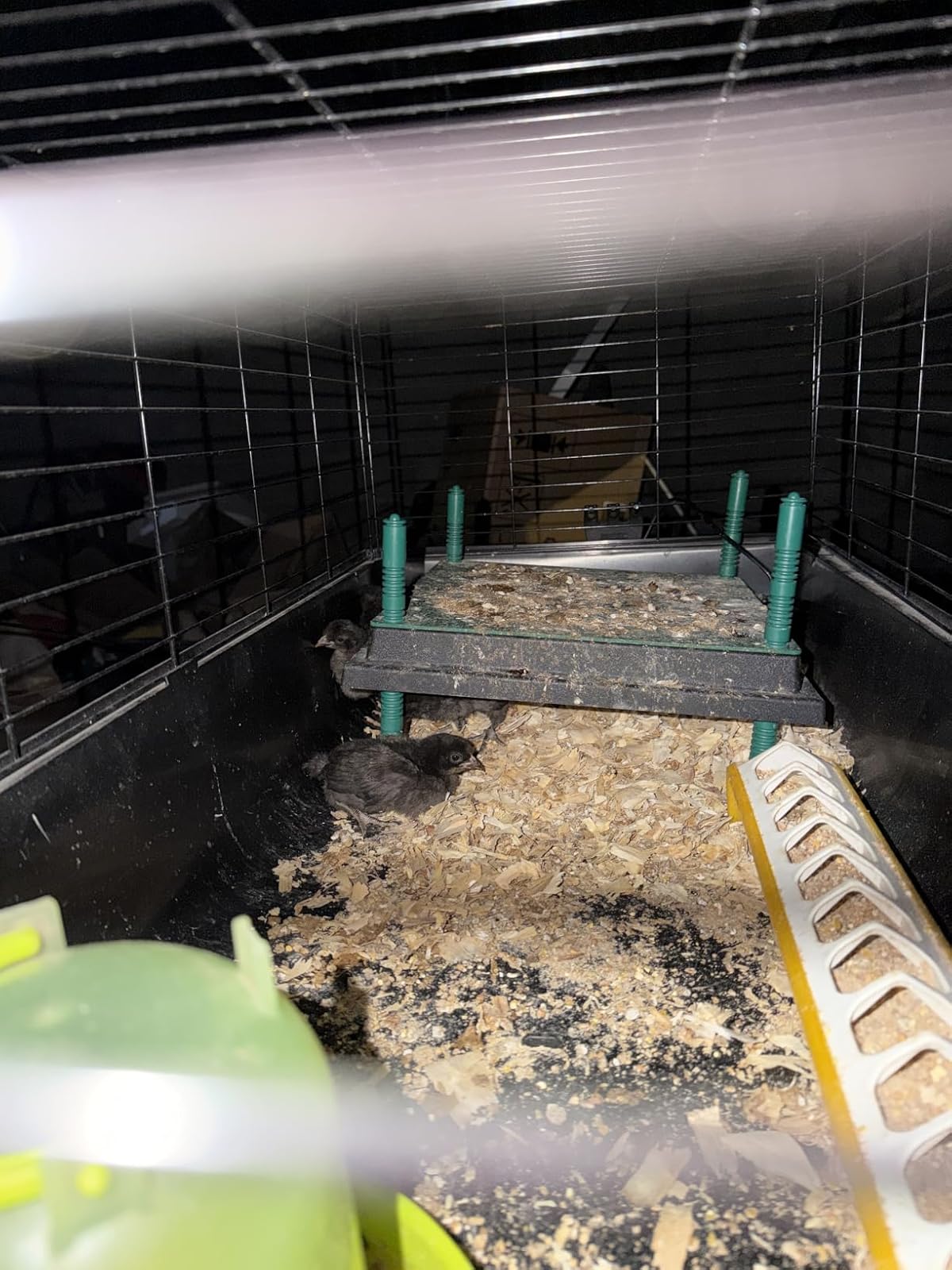
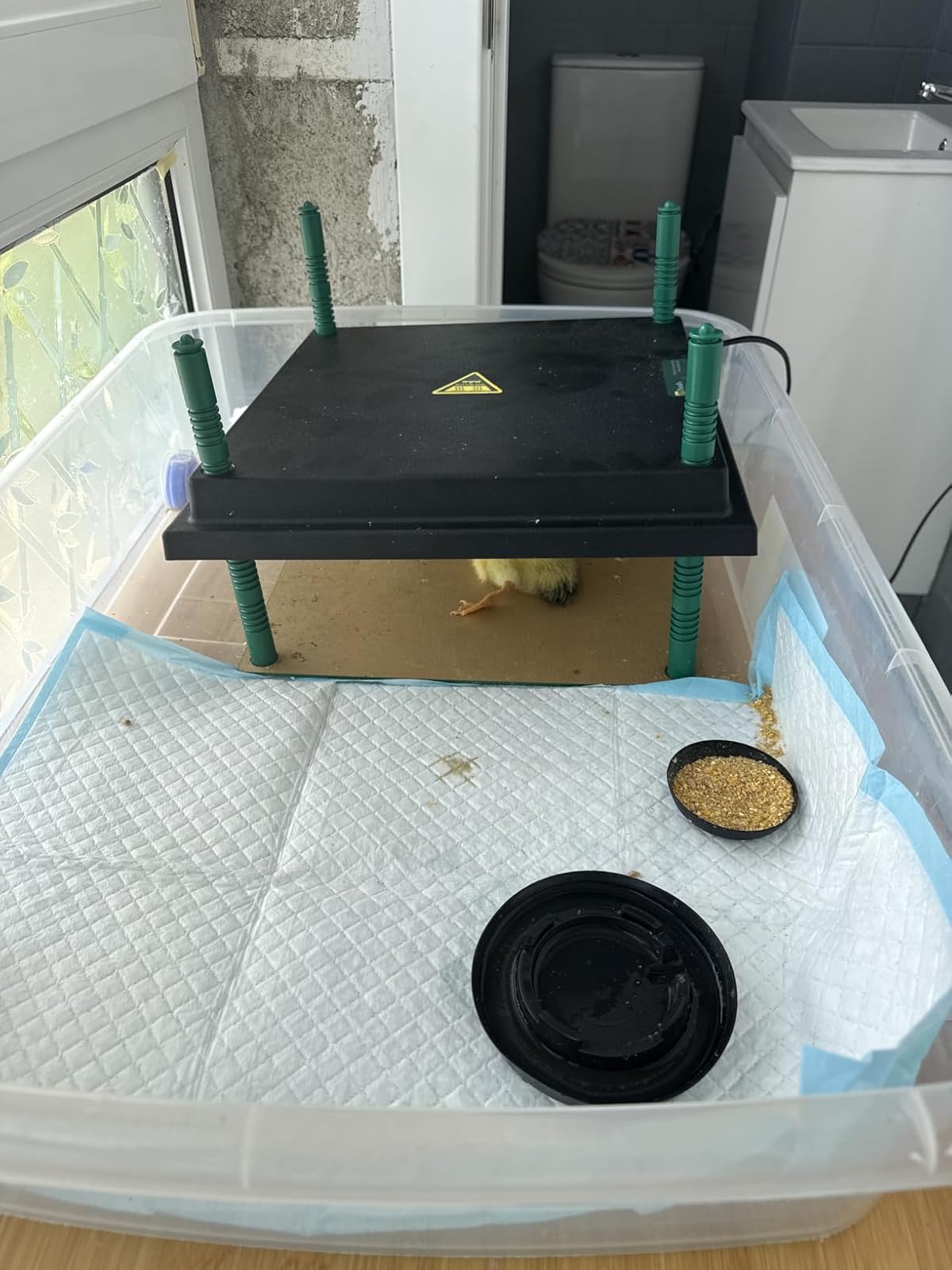
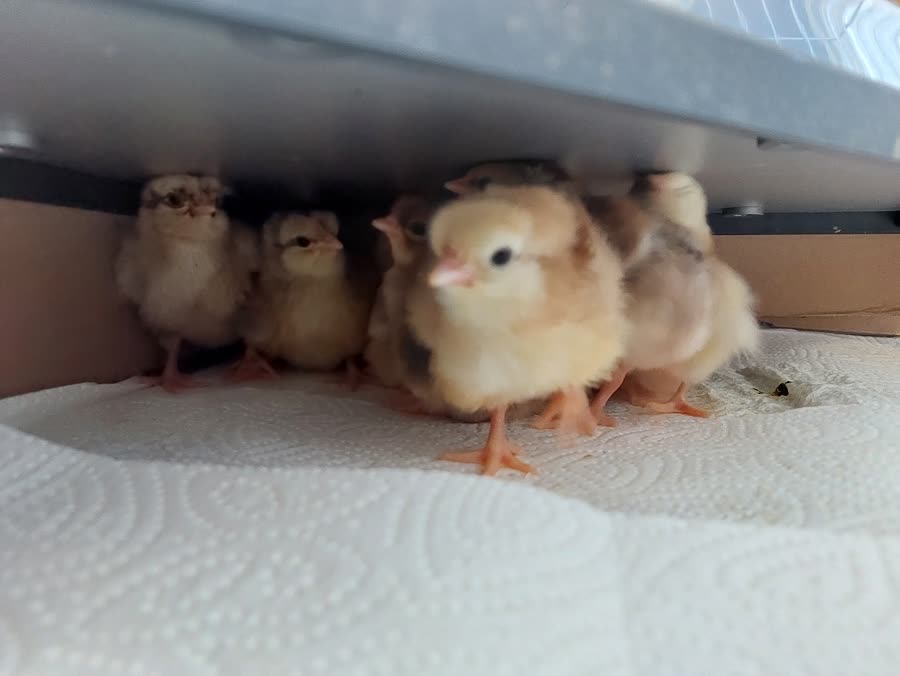
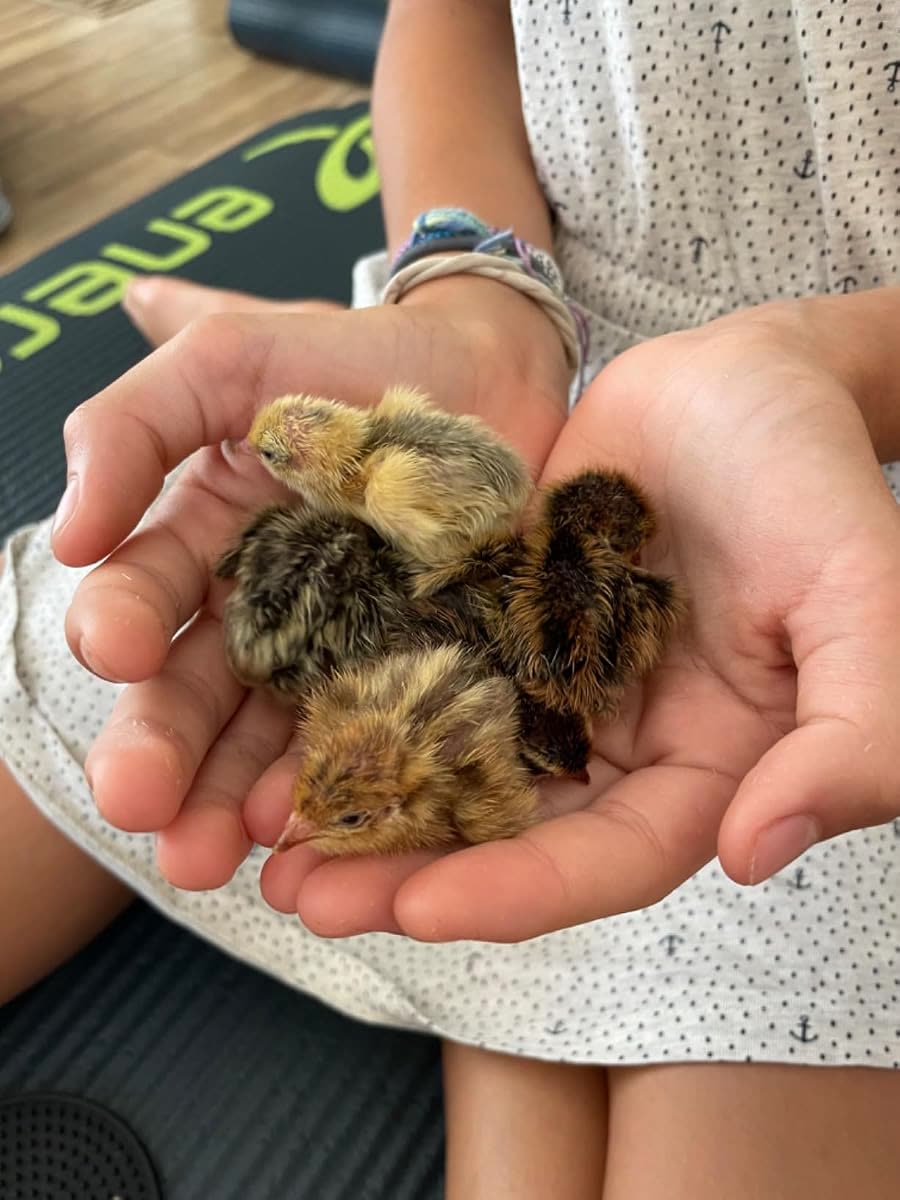
Chicks just out of the incubator? The plate takes over through the brooding weeks.